Latest News
ROPES: Building Teams, Developing Leadership

CIS-SA offers ROPES - Reality Oriented Physical Experiences - team-building activities, including High ROPES, at our facility off Hwy. 90 or at your place of business.  Our trained and experienced professionals can lead your team through a series of initiatives and physical elements that are designed to promote personal growth, enhance life skills and improve group cohesion and interaction.  ROPES activities inspire participants to learn skills easily implemented in the workplace, school and other group settings through fun, interactive, hands-on activities. 

For more information, contact David Gauna at (210) 990-0933 or at dgauna@cissa.org


CIS-SA works!

Outcomes for the 2011-2012 School Year

Read more...
 
Home Grown Success

Rey Saldana

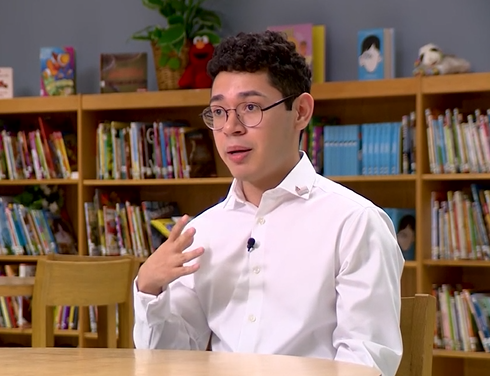
Rey Saldaña never imagined himself a leader. Now, he's a city councilman.

The watch party at the YMCA on Southcross quickly turned into a victory celebration as 200 supporters congratulated Rey Saldaña, the new city councilman of San Antonio’s District 4.  In another part of the city, Dafney Bell was watching the election-night results on her TV at home.

“When I first heard the news, I got chills,” said Bell.  The director of Upward Bound for Communities In Schools of San Antonio, Texas, remembered her former student as focused and with an inner drive.  “Rey just shined.  He definitely had the potential.  But this was a kid who didn’t even know what he was capable of.  He’s an inspiration to us all.”  

Saldaña’s election to District 4 city councilman last May is a testament to his work ethic and evidence of his heart belonging to his hometown.  It also reflects his ability to turn the unlikely and the improbable into a reality.

As a student at South San Antonio High School, Saldaña participated in Upward Bound, a four year program administered through a federal grant that allows Communities In Schools to provide high school students with college prep support and assistance while in college. He met the necessary requirements — good grades, first generation college student and from a low-income family.  Upward Bound assists with tutoring, counseling and mentoring, with a focus on college readiness.  At South San Antonio High School, participants got to spend five weeks on a college campus, immersed in an authentic, post-secondary education experience.  For Saldaña, it was a summer that changed the trajectory of his life.

“That had a huge appeal to me,” said Saldaña, now 25, recalling his first experience traveling outside of his neighborhood and being outside of his comfort zone.  “You take that out of the equation and I’m a student who still has a horizon that’s a three mile radius from his home.”

Saldaña graduated, earned a full Gates Millennium scholarship and then traveled 1,500 miles away to California to attend Stanford University.  It took him a total of five years to complete two undergraduate degrees — one in political science and another in communication — and a master’s degree from the School of Education.  In May 2010, Saldaña became the first in his family to graduate from college.  Afterward, he returned to San Antonio to run for office and make a difference in the place his family has called home for nearly 30 years.  Like other college-educated professionals who have returned to their native communities, Saldaña has chosen to apply his impressive credentials to serve and become a leader in his hometown.  “If you can effect any kind of change, it has to happen at the local level,” he said.

It has been almost a year since Councilman Saldaña started working from the city hall offices in downtown San Antonio.  There is no salary for this job. Saldaña describes the work as sometimes hard, because of what he has to do, most times frustrating because of what he’s unable to do, and almost always rewarding because of what he gets to do for the residents in his district.  His focus does not stray far from his commitment to the young people in San Antonio.  He teaches courses in education at Trinity University and Palo Alto College, and is currently mentoring two students, both from Communities In Schools partner schools.

He also mentors his three younger brothers.  Saldaña arranged for laptops to be donated to the Robotics Team at South San Antonio High School.  And he recently ran in a charity 5K race to benefit Communities In Schools of San Antonio.  His actions reflect his alignment with the Communities In Schools “Five Basics,” especially giving back to peers and community.  And while Saldaña is modest when it comes to talking about all that he has accomplished, he recognizes that his life experiences are inspirational to others.

“When I am somewhere speaking, I see more of a glimmer of hope in the eyes of parents,” he said.  “For some of them, it might be that they think because they don’t speak great English, they can’t help their children be successful in school and graduate and go on to college.  But they see me, and they hear my story, and then they see that it is possible.”

Communities In Schools connected Saldaña to a resource that put him on a path to become a leader in his community.  And as Saldaña has proved with all of his successes, with the right support and resources, the possibilities are endless.


Five-Year Comprehensive Evaluation Ranks Communities In Schools as the Most Effective Dropout Prevention Organization in America

Largest and Most Comprehensive Evaluation of Dropout Prevention Programs Ever Completed

Feb. 25, 2011
Communities In Schools, the nation's leading organization dedicated to empowering students to stay in school and achieve in life, today released the results of a five-year comprehensive longitudinal evaluation, conducted by one of the nation's foremost social science evaluation firms.

After five years of detailed evaluation underwritten by The Atlantic Philanthropies, the evaluation concluded that Communities In Schools' model resulted in the strongest reduction in dropout rates of any existing fully scaled dropout prevention program that has been evaluated; that Communities In Schools is unique in having an effect on both reducing dropout rates and increasing graduation rates; and that the Communities In Schools model is effective across states, school settings, grade levels and student ethnicities. Importantly, analyses indicate that the more fully and carefully the model is implemented, the stronger the effects.

The study, the largest and most comprehensive evaluation of dropout prevention programs ever completed, was designed with eight distinct interlocking phases, including:

  • An implementation study that examined results from 1,766 Communities In Schools sites nationwide;
  • A quasi-experimental study that compared results from 602 Communities In Schools sites against 602 matched sites without a Communities In Schools presence;
  • A "deep dive" study of 368 Communities In Schools sites to identify best practices; and
  • Three randomized controlled trials, the gold standard in social science evaluation, studying 573 students at nine sites.

This comprehensive, multi-level multi-method study has provided important information about the effectiveness of the Communities In Schools approach, and I am pleased that Communities In Schools is using the findings to make their model consistent and strong across hundreds of sites, commented Kristin Moore, Ph.D., senior scholar, Child Trends, and member, Communities In Schools National Evaluation Advisory Committee.

In comparing the results to over 1,600 studies screened by the U.S. Department of Education's What Works Clearinghouse, the evaluation concluded that the Communities In Schools model is associated with the strongest reduction in dropout rates among all existing fully scaled dropout prevention programs in the United States. Specific findings included:

  • Communities In Schools' positive effect on both dropout rates and graduation rates is unique among dropout prevention programs;
  • The higher the level of fidelity to the Communities In Schools model, the greater the effects, which validates the power of the model;
  • Positive effects accrued to schools across states, settings (urban, suburban, rural), grade levels and ethnicities; and
  • The Austin randomized controlled trial, which demonstrated a reduction in student dropout rates that was nearly three times the What Works Clearinghouse's threshold for "substantively important" effects.

The Communities In Schools model is a powerful tool to help turn around low performing schools. In partnership with teachers, principals and superintendents, Communities In Schools is achieving impressive results in some of the most economically disadvantaged areas of our country, said Dan Domenech, executive director, American Association of School Administrators.

The results from the evaluation are already being translated into improved service delivery by Communities In Schools local affiliates. Based on the mid-point results from the Implementation Study and the Quasi-Experimental Study, Communities In Schools codified a set of program and business standards that the research revealed had the greatest effect on student improvement, and then drove those practices back into the network through an accreditation process. Approximately 108 affiliates have been accredited or are in the process, with all affiliates on track for accreditation by 2015. Communities In Schools of San Antonio is a nationally accredited affiliate.

The research findings have fueled an even greater sense of urgency within our network – a commitment that we need to bring the strongest, most evidence-based and rigorously evaluated practices to the young people we serve, and that we need to do it immediately, said Daniel Cardinali, president of Communities In Schools.

In addition to taking this research to practice, Communities In Schools has identified several areas for further study, and is currently developing plans for future phases of research. We have an obligation to the young people we serve and to the field we lead to continue to grow the body of evidence that informs our work, said Cardinali.

N.B. In conducting this research, the evaluators adhered to the approach of the What Works Clearinghouse in measuring program effects, which recognizes the practical importance of understanding the magnitude of effects (as measured by effect size) as opposed to relying solely on statistical significance.

A copy of the final evaluation report can be found at: http://www.communitiesinschools.org/about/publications/.

This story was originally published by Communities In Schools National. Further information can be found at their website.


More Articles...
«StartPrev12NextEnd»


Volunteer

E-Newsletter